
As you approach the village of Ticknall in South Derbyshire it is probably the spire of the village church you first see. The church is named after Saint George and is an imposing building on a low rise to the north of the village…..

Records show that there has been a church on the site since the 1200’s, possibly much earlier. It was attached to the Priory of Repton, some 6 miles away and was later dedicated to Thomas a’ Becket. But the church you see to-day is not the original church.
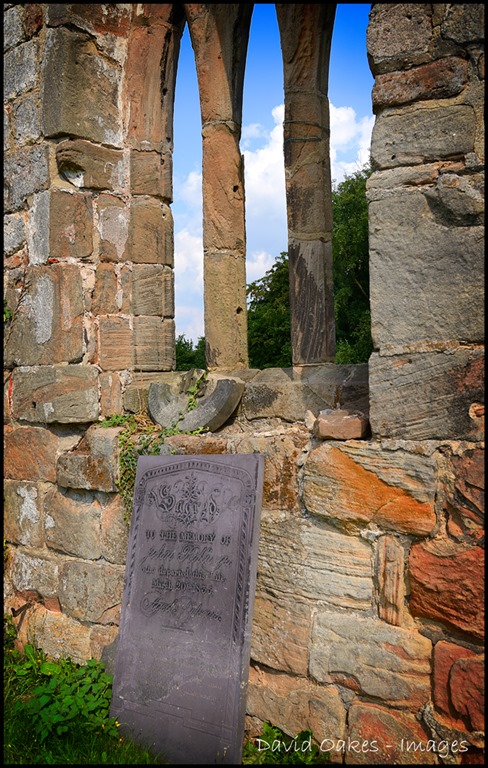
The East window of that first church can still be seen in the church grounds. There is also a ‘Preaching Post’ that may pre date that first church and was later relocated to the church grounds…..

Behind that post and to the left of the church drive you can also find remains of the original gable and tower.
The village of Ticknall enjoyed a period of expansion in the 1700, employment in agriculture, mining and industry saw the population increase…it increased to such an extent that the land surrounding the church was acquired to enable both the expansion of the graveyard and to allow the building of a new larger church.
Thanks to the commitment of Sir George Crewe from the adjoining Calke Abbey Estate the church was commissioned and I think completed in 1842 and named Saint George of Ticknall. But the villages fortunes changed again and the population soon dwindled and has remained low ever since…..
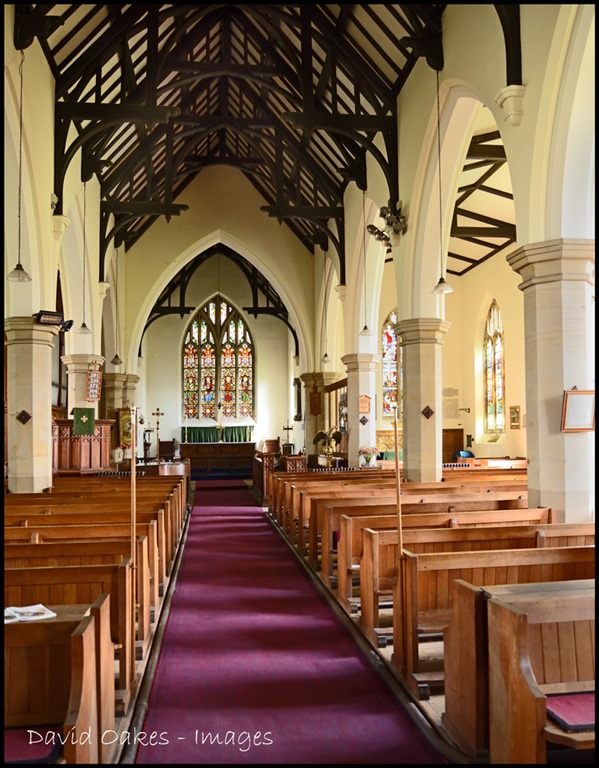
The interior is simple but stylish, a wooden arched ceiling and stone pillars set the scene which is well lit by large arched stained glass windows….

The side chapel has various memorials to members of the Harpur Crewe family and an ornate wrought iron suspended screen features the Harpur Crewe family logo of the Boar…..

A walk arround the graveyard, reading the headstones tells its very own story and history of the village…but it is an experience in any old graveyard that I find very poignant. Take this headstone set aside beside the old eastern window for one John Rolling who died in 1835 – at the age of 37, like so many of his and earlier eras, so young…..
 Because of that decision to expand the church grounds, Saint Georges can enjoy the benefit of serenity with so much open space about it, a feature not shared by many of our English churches often crowded by village buildings seeking the security of the church……..

26th August
© David Oakes 2013
 DAVID OAKES - IMAGES.