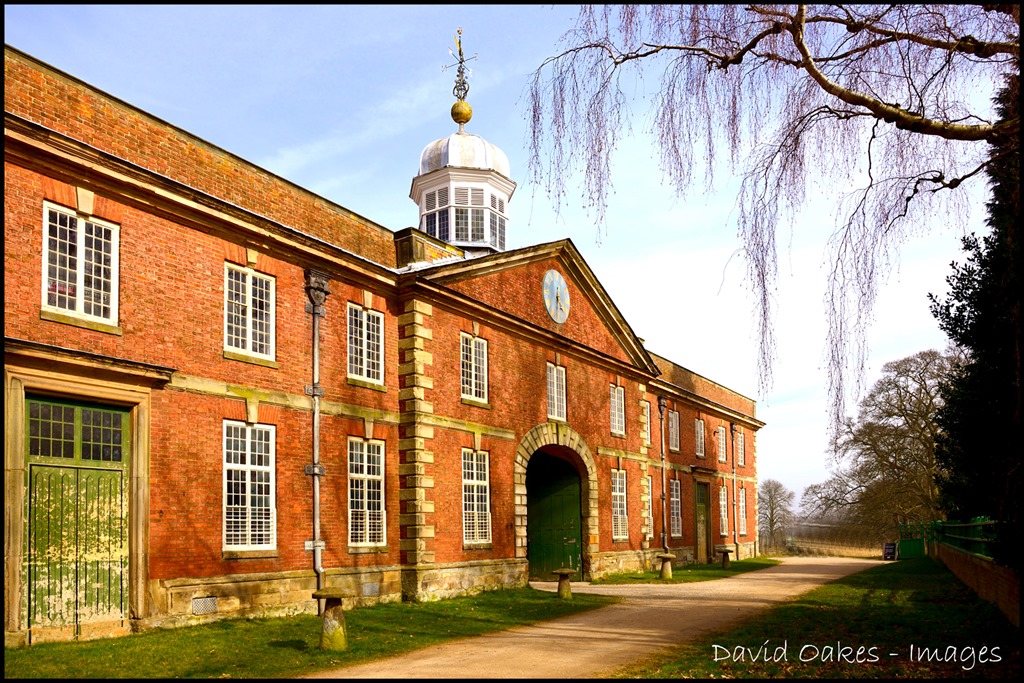
This magnificent frontage is just a small part of the Stable Block at Calke Abbey. Architecture from past eras more often than not much grander than the utilitarian function of the buildings. Resplendent under a golden globe, with weather vane and an observation dome, a host of windows and constructed with a mix of stone and brick it is indeed a stable block on a grand scale. BUT look more closely at the double doors on the left….they are false! In fact there are several other false doors** around this building and I am not sure exactly why.
Not that there is a shortage of doors, the inner stable yard is surrounded by doors. In fact you get double your monies worth as several are like this double door set which also sports a ‘personnel door’……..
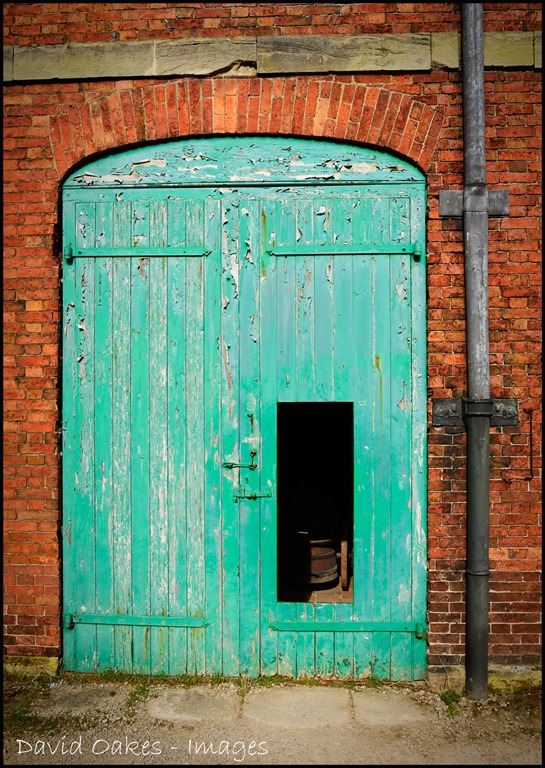
even in its distressed state it is still a splendid set of doors….so I don’t think we will recommend a lick of paint.
** False Doors are not common. However false windows are another matter (though not on this building). Several centuries back the English Parliament introduced a ‘Window Tax’….The owners of building with windows in excess of a suddenly imposed number had a Tax levied for every extra window. So if you wonder round our old cities you will see many an old building with a window bricked in to avoid the tax dues. The tax didn’t last for long.
17th March
© David Oakes 2014
 DAVID OAKES - IMAGES.
I don’t think I’ve ever heard of the window tax before–what an odd concept! Do you know how long it was in effect? I’m also puzzled by the concept of false doors, and am having difficulties trying to come up with a logical reason to construct such a thing–maybe so one could be more easily added down the road, if a need should arise?
LikeLike
It was an early form of personal taxation (guess what Income tax was not popular!) Introduced in England at the beginning of the 1700’s, then adopted by Scotland in the mid 1700’s and not long after followed by France. There was a flat rate of Tax per Property, then for houses with more than 10 windows an additional variable rate was applied, this variable rate had a further increase when the number of windows exceeded 20. The Stable Block above was probably exempt (though not sure) as certain industrial and agricultural buildings such as Dairies were ‘tax free’.
LikeLike
Oh soo lovely photos! and the post as well great blog.
LikeLike