
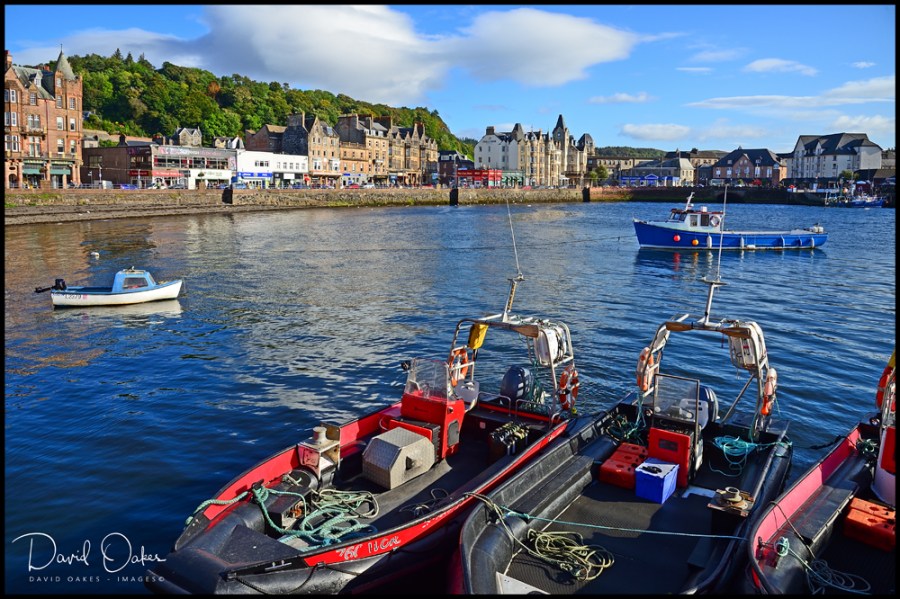
Oban….Argyll
Oban….still a vital link to the outer Isle of the Hebrides. Ferries plough still important links on a daily basis. There was a time when that link was vital for the many passengers who regularly made the journeys to replenish their store cupboards and essentials. That still happens but progress has ensured that each of the Islands is now well stocked. The shops in the town still reflect the need to supply just about ‘everything’. Always an important town, always busy, Oban grew more rapidly in the 1790 as the importance and fortunes of the Oban Distillery grew.
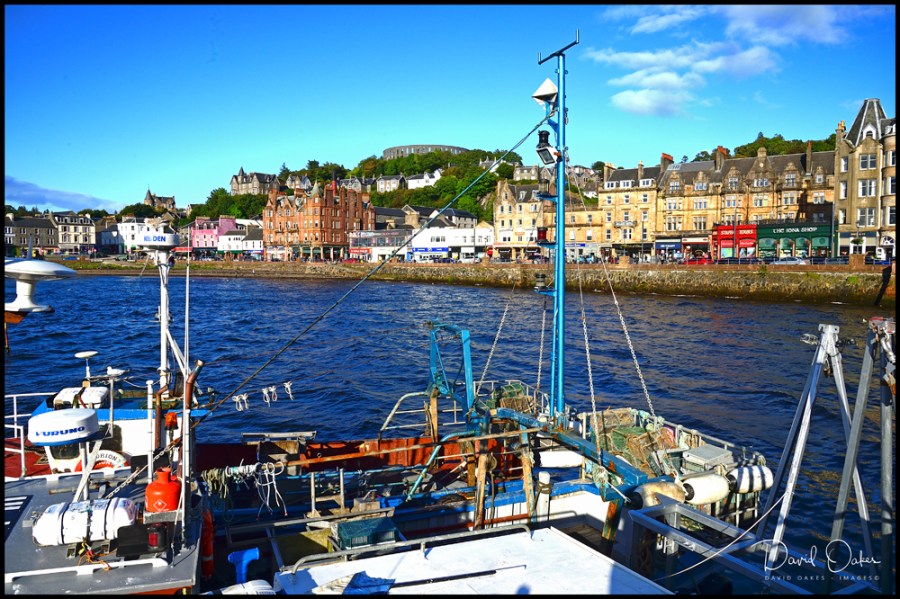
There was also a time, a time that even I can remember, when it was the Fishing Fleet that filled the harbour. Lorries jostled for places on the quay that was covered with fish boxes and crushed ice. Those lorries then sped away to distribute the Fish across the UK.
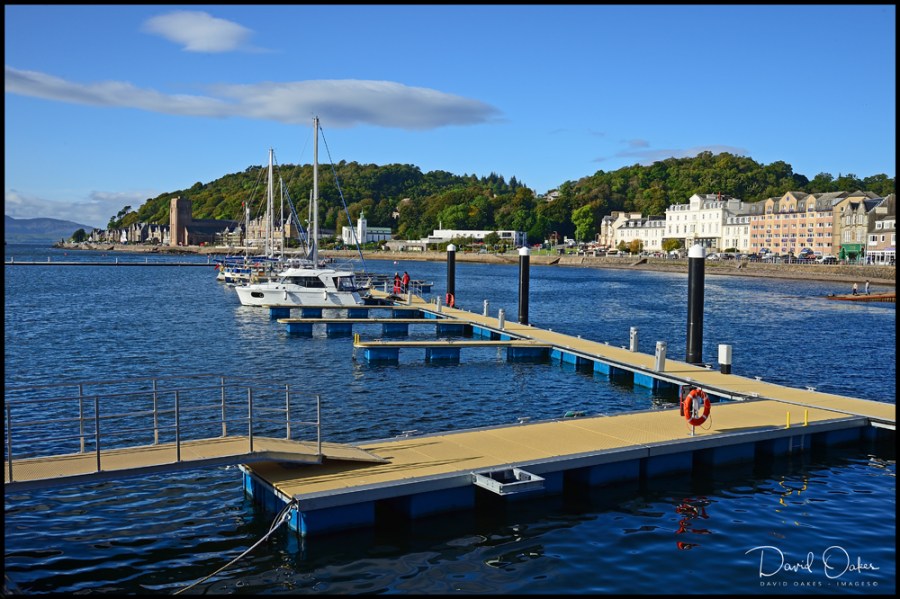
Today the Harbour is much quieter and attracts Leisure Yachts ( a new marina is now in place). Cruise Liners occasional visit but have to anchor in the bay.
Oban was built on the importance as a port but like many other coastal towns of any size was developed in Victorian times as a holiday destination. Today the promenade reflects this stylish building.


Less than 5 miles to the north of Oban can be found one of Scotland’s oldest Castles. Dunstaffnage….. its history and location dates back to the times when Norway and Scotland shared the rule of this area. The Castle became the home of the MacDougall Clan in about 1164 and was proudly held by them for several centuries.
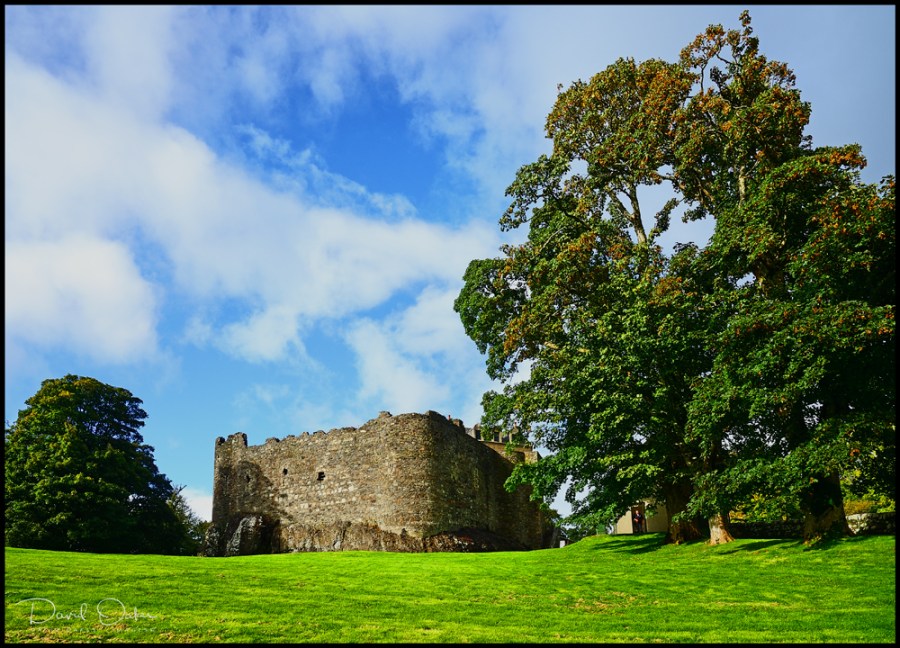 Dunstaffnage Castle
Built in the 1220’s the first appearance of the Castle is of a solid square fortress. The entrance is defensively above ground level…. but walk thru that Gate House and you find an inner court of what at one time was fashionable accommodation…..and importantly the vital Well.


In the woodland behind the Castle you can find the Family Chapel. Built by Duncan MacDougall in the 1200’s it was a clear illustration of the families wealth and importance. It was a single open space but well decorated with carvings and stonework.
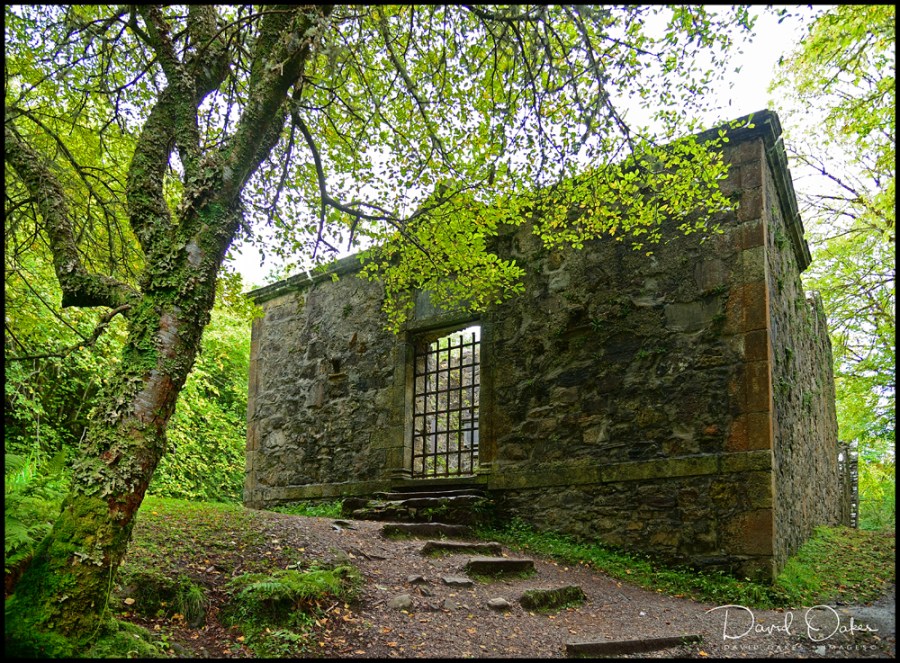
Dunstaffnage Chapel
For many of its years the Chapel was just a place of worship, a burial licenses was not granted. It seems that family burials were carried out on neighbouring islands. The Campbell’s secured the Castle and with it the Chapel and following the Reformations they built a burial aisle at the end of the Chapel and into that many of the family Burial Stones were installed.


Locations for castles were supposedly selected for there defensive strength…but for me it is the Loch side location alongside Dunstaffnage Bay.


12th October
(C) David Oakes 2017
 DAVID OAKES - IMAGES.