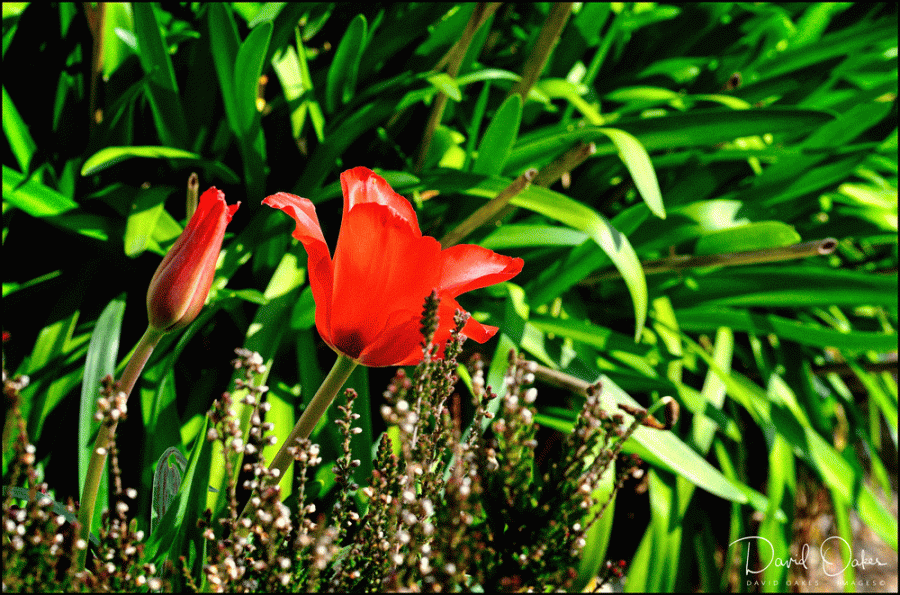
Last of our Tulips….
The daffodils headed home last week, gone for another year. Now it is the turn of the Tulips to head in the same direction. Spring came early and for some of our flowers both wild and cultivated came with a bit of a rush and gave up their displays all too soon.
The good news is that it is the turn of the wild woodland flowers to takeover. Over the coming weeks I hope that I can bring you some of this years displays of wild colour in our woodland.
Now for something strange
We have a Camellia bush in our garden, only one. We planted it on a south facing wall some 38 years ago and it continues to thrive…..so what’s the problem.
Well in one way there is no problem. This year like every spring we get lots of lovely Camellia blooms. They are short lived flower heads and susceptible to rain and frost damage and discolouration. Thankfully this spring it has been kind to them.
So what’s the problem?
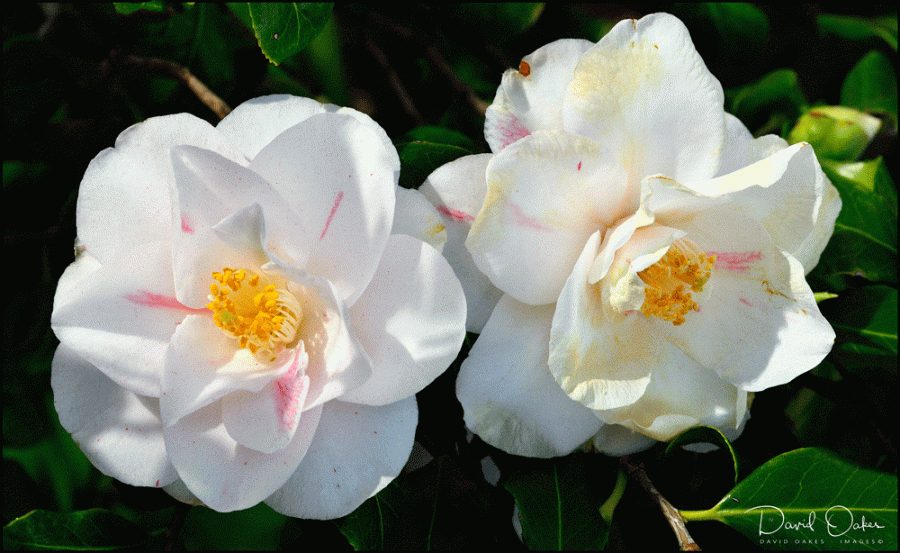
Just two of the many delicate White blooms currently on display.
The strange thing is that it was a Red Camellia we planted all those years ago. Then about 15 years ago the Red blooms vanished and replaced by these White blooms, some have a tinge of red streaking but mostly they are now all White.
So it was a great surprise that this Spring one solitary Red Bloom suddenly appears….
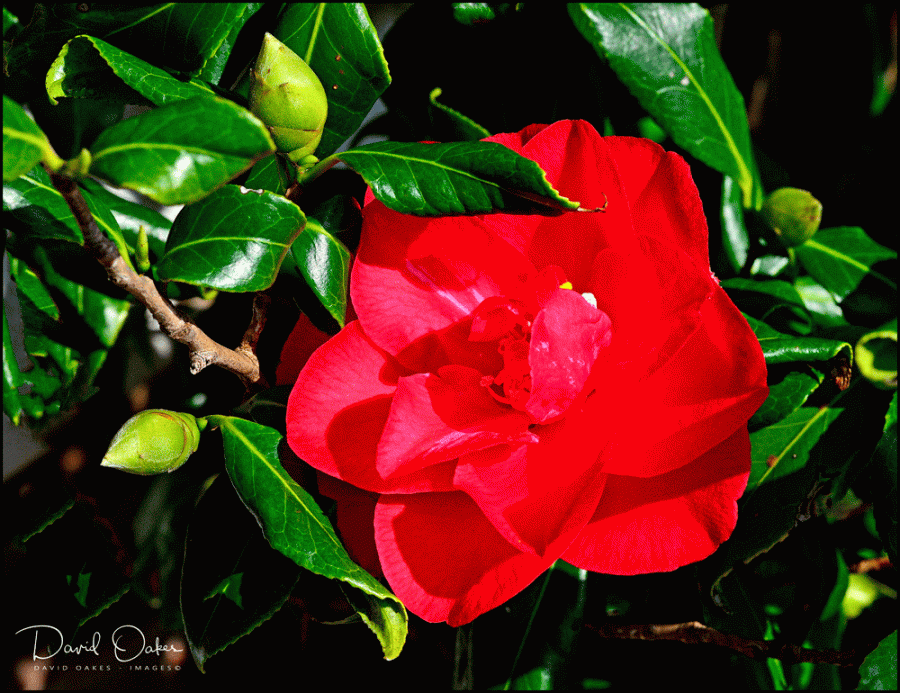
……Just to remind us that we were not imagining the original planting.
Nothing is stranger than nature !
10th April
(C) David Oakes 2017
 DAVID OAKES - IMAGES.
You have been getting som grey hairs over the years as well, haven’t you David? 🙂
LikeLike
I suppose that is correct 🙂 Kind of you to point that out ! 🙂
LikeLike
I’m sorry David, but there is a limit to temptations you might expose me to 😀
But I understand your garden flower has exceeded 38? Thats pretty old too . . .
LikeLike
Perhaps I need to worry….my hair was at one time tinged with red, my beard more so. Therefore on the basis of your theory/observation I could possibly revert back like the Camellia. Oh! and by the way I am still only 23. 🙂
LikeLike
There’s a word missing here somwhere, David! Could it be ‘feeling’?
It’s like moving in uncharted territory these days, but it’s kind of fun too . . .
LikeLike
Could it be the soil?
LikeLike
That is odd, but what a beautiful surprise.
LikeLiked by 1 person
I guess I am not complaining….at least it is in bloom
LikeLike
I have tried to find out and received this answer: Maybe the original bush was a graft. It could be possible that this graft had more strength and energy to more or less take over. The leaves could be slightly different than the ones earlier. It’s called a cultivar or something like it. You would be able to find it when you look the at the bottom of the stem just above the soil. It could be that a thicker branche has become the main shrub. The old one stops after several years to bloom. Some gardeners (Bakker in this case) call it mutant shurbs.
It intrigued me (is that spelled right? I don;t think so?).
LikeLike
Original stem….Have also been told that it really needs a dedicated fertiliser prepared for Rhododendron and Camellias ?
LikeLike
I know the color of Hydrangea blossoms is influenced by whether the soil is acidic or alkaline. Perhaps that is true of Camellia too!
LikeLike
I have found some Rhododendron/Azalea and Camellia fertiliser so will see what happens next year ! ? 🙂
LikeLike
I’ll twiddle my thumbs for you and your camellia!! 😀
LikeLike